July 6, 2026 · Invisible journaling
The one-line journal: why a sentence is enough
MetaLife does the journaling for you — you just live your day and capture a moment when one comes.
Start free for 30 daysJuly 6, 2026 · Invisible journaling
MetaLife does the journaling for you — you just live your day and capture a moment when one comes.
Start free for 30 daysOne sentence a day is enough to hold a whole day, as long as something turns that sentence into more than a fragment later. On its own, a line like "rough call with the landlord, good dinner after" is thin. Read back a year of those lines together, or handed to something that can connect them, and a shape appears that a full page a day rarely produces, because nobody keeps the full-page version long enough to build a year of it.
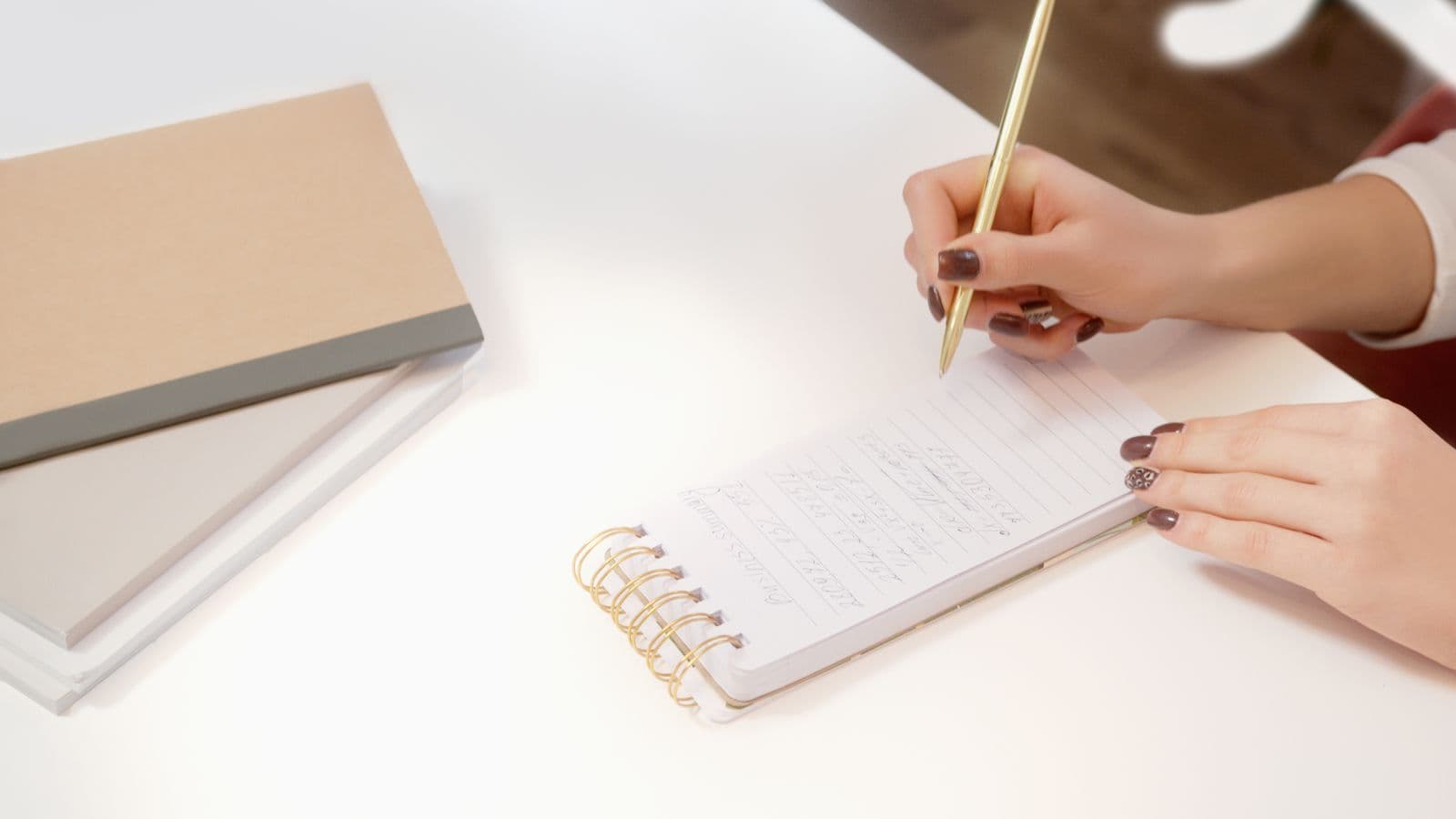
The one-line-a-day diary is not a new idea. Five-year diaries with a few ruled inches per date have sat in stationery shops for generations, and the people who actually fill them tend to say the same thing: a full page felt like a chore, a line felt possible on a bad night. That's the entire mechanism. A blank page asks you to compose. A single line asks you to notice. Composing takes energy you don't reliably have. Noticing takes almost none.
This isn't a workaround for people too busy or too lazy for real journaling. It's closer to the opposite: a page a day is the version that quietly demands ideal conditions — a calm evening, a clear head, twenty free minutes — and then fails the moment those conditions aren't met, which is most nights for most people. A line survives a bad night because it doesn't need any of that. You can write one from a phone in a hallway, half paying attention to something else.
Not detail. A single line can't hold the texture of a hard conversation or the specific shape of a good one. What it holds is sequence and weight: this week was heavy, this one was light, this stretch in March was strange for reasons the lines alone half-explain. That's a different kind of value than a detailed page gives you, and it's the value that compounds, because it's the only version most people actually keep filling in for months at a time.
Read back three hundred one-line entries and a pattern turns up that no single day would ever reveal: the weeks that get logged as "tired" cluster right before a deadline. The good days keep mentioning the same person's name. A stretch of short, flat entries lines up with a period you'd otherwise have written off as unremarkable, except it wasn't — it was just quiet in a way that never got a full page written about it, so you'd have no record of it at all in the page-a-day version. The line is small. The pattern made of many lines is not.
Here's where the method deserves honesty rather than a sales pitch. A paper one-liner has a real, permanent limit: it stays exactly as flat as the day you wrote it. Nobody goes back through a five-year diary and reorganizes the lines by theme, connects the March entries to the September ones, or notices that three different "rough day" lines all mention the same project. The lines sit there, in order, and the only thing that ever finds the pattern in them is you, rereading the whole book, which almost nobody actually does. The format's strength — it costs you almost nothing to fill in — is also why almost nobody goes back and does the harder work of reading it as a whole.
That's not a flaw in the discipline of writing a line a day. People who keep a paper one-liner for years are doing something genuinely worthwhile, and the habit deserves respect on its own terms even if the review never happens. It's just worth being honest that the format was built to be written, not built to be searched, cross-referenced, or summarized. Those are different jobs, and paper was never asked to do the second one.
This is the part an invisible journal actually adds, and it's worth being precise about what does and doesn't change. You still write the line. Nobody else can notice your day for you, and pretending otherwise would be dishonest about what any tool can do. What changes is everything after the line leaves your hands: it gets read, filed under what it's actually about, and folded into a picture that updates as you keep going, instead of sitting inert in a book that only tells you something if you reread the whole thing yourself.
Concretely, that means the March "rough day" and the September "rough day" get noticed as part of the same pattern without you cross-referencing two entries five months apart from memory. It means a quiet stretch that would have looked like nothing in a paper diary can get reflected back as exactly that — a quiet stretch, which is itself useful information about a season of your life. MetaLife's AI assistant does this reading and connecting in the background, and can be asked directly about what it's noticed, rather than you scrolling backward trying to reconstruct the shape of a year from a stack of single lines.
It's still journaling, in the sense that matters: it's your own account of your own days, in your own words, kept over time. The line between "journal" and "log" has always been softer than people assume — a log becomes a journal the moment it starts reflecting something back to you, and a page of prose stops being one the moment nobody, including you, ever reads it again. A sentence read back and connected to a year of other sentences does more journaling work than a page written once and never revisited, which describes most abandoned notebooks. See what an invisible journal does for the fuller version of this argument, and the glossary for a plain definition of terms like "capture" and "structured data" used across this site.
Q: Isn't one line too little to actually remember anything by?
A single line rarely reconstructs a day in detail on its own, and it isn't meant to. Its value shows up in aggregate — a year of lines held together reveals shape and pattern that no individual line carries by itself, the same way one data point tells you nothing and a hundred tell you a trend.
Q: Do I have to pick between a one-line entry and a longer one?
No. Some days genuinely deserve more than a sentence, and there's no rule against writing three lines or three paragraphs on the day that calls for it. The one-line method is a floor, not a ceiling — the point is that a single sentence is always enough to count as showing up, not that more is ever wrong. Read you don't need to write every day for the related case against a daily requirement altogether.
Q: What if most of my days genuinely don't feel worth even one sentence?
That's common, and it isn't a failure of the method. Some days genuinely produce nothing worth a line, and skipping those is fine — a one-line practice that only fires when something's actually worth noting still builds a real record over a year. Blank-page paralysis covers the specific trap of feeling like every day owes you a full entry, one-line or otherwise.
A sentence is a small thing to ask of a day, which is exactly why it survives the days a full page never would. The method has existed for decades because it works on its own honest terms. What changes now is what happens to the sentence after you write it — read, connected, and handed back to you as a shape you couldn't have seen one line at a time.